

By Gavin Murphy
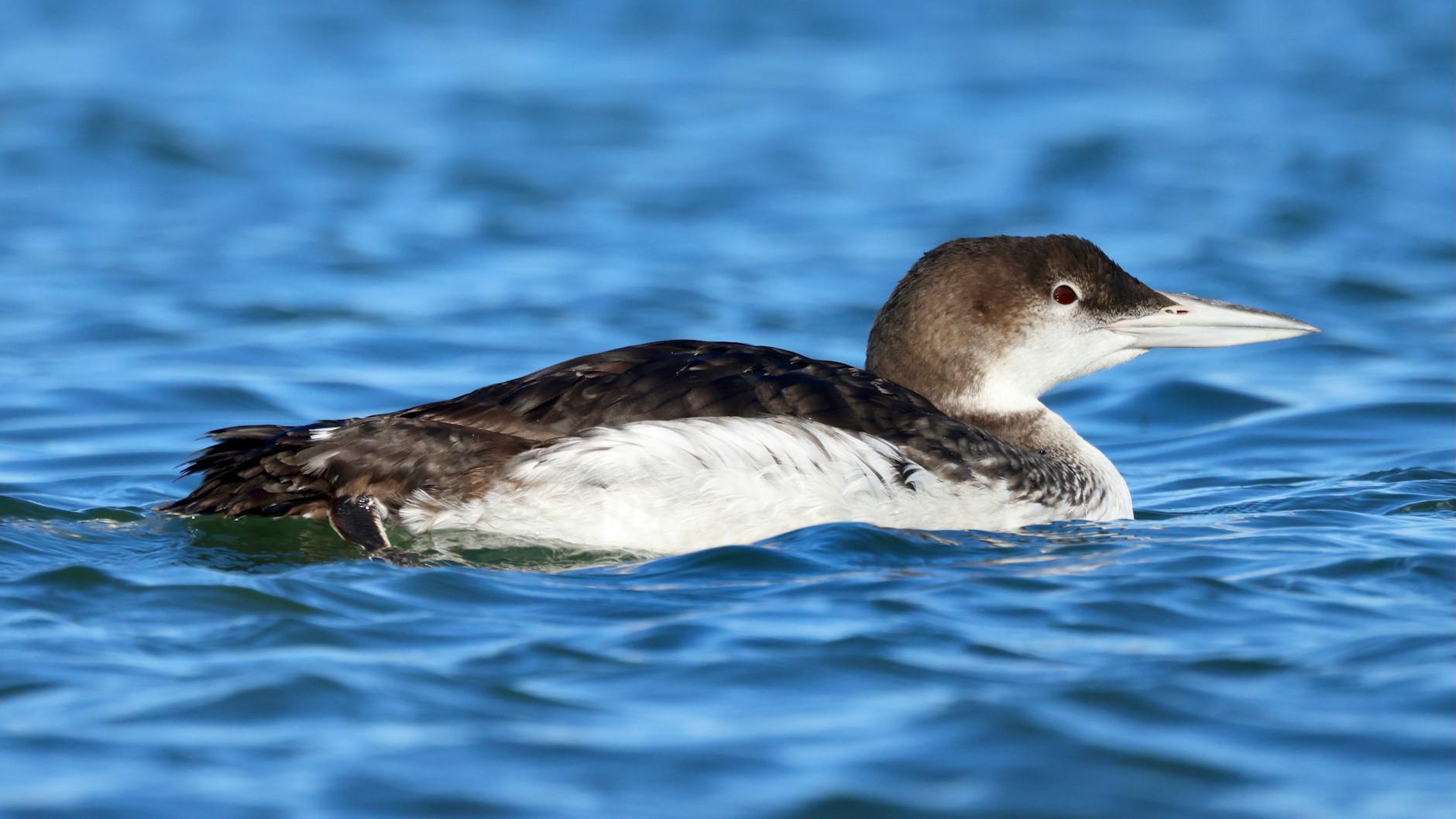
The loons arrive on the Georgia coast in winter.
They have traveled all the way from the freshwater lakes where they breed in the Adirondacks, Vermont, Maine and Canada to winter here in the ocean where the water is warmer than up north, but still chilly.
The grackles, who seem to hide somewhere when it gets really hot, have been back for weeks, raising a ruckus on the beach. Chattering and fighting over the diminished scraps of food left by humans now that the summer beach season is over, or screeching about a washed up dead crab. They are supposed to be eating the sea oats to help with spreading of the seed, not foraging for spilled potato chips.
Cormorants are flocking offshore, flying back and forth, sometimes hundreds, even thousands of birds. It helps to have binoculars, but if you have good eyesight you can maybe distinguish a loon or two bobbing up and down a hundred yards or so offshore with the cormorants.
The cormorants have long hooked beaks, designed for catching fish, while the bill of a loon is more dagger like, and yes, at a distance it’s hard to tell the difference.
Just when you think you have spotted a loon, it dives beneath the surface, looking for a fish to eat or because that’s just what loons do, only to resurface 50 or a hundred yards away. Or just disappear entirely.
The loons have lost their runway worthy spring and summer pelt of black and white spotted plumage with a prominent black feathered head and mysterious crimson red eyes. They have transitioned into leaner specimens for the winter – sleeker, with muted gray striped plumage, brownish eyes and white throat that helps distinguish them from the darker cormorants.
(This seasonal molting leaves them briefly unable to fly!)

In winter there is no reason for loons to call the way they do in summer, when their high pitched almost mournful wails heard morning, noon and night echo across the northern lakes as they call for their mates, or for their chicks (“loonlets”).

Other migratory birds enjoying the relatively balmy winter temperature of the ocean off Tybee Island in December or January and February have travelled even longer distances than the loons, whose summer breeding ground of mountain lakes is now frozen.
While a few mergansers and maybe even the occasional orange billed scoter hunt for food near the jetty, the loons and cormorants are content to stay in the choppy water offshore. Ducks tend to stay in the marsh or in fresh water, but a large flock of greater scaups may arrive in the ocean just offshore later (even though the bird book says they are “infrequent visitors” to the coast in winter). They have come from as far away as Siberia. Binoculars again come in handy to observe their iridescent green heads, which from shore appear to be jet black.
Meanwhile the usual bird suspects are gathered on the beach.
With far fewer half naked humans wallowing on the sand, the seagulls and the terns and the skimmers gather in large flocks on the beach where they hunker down together to take cover when a chilly wind is sandblasting them. They usually only move when bundled up humans strolling the shoreline get too close (please don’t deliberately disturb the birds) then they levitate as a group, stay airborne for a short distance, then descend together to the beach, tuck in their wings and retract their necks, again facing into the briny breeze.

Sometimes the skimmers, with their almost toucan like beaks, will decide as a group to make a run over the ocean, gliding close to the surface, like the pelicans often do. If you are lucky you will see the skimmers feeding, “skimming” the water with their large black and red mandibles (beaks) as they suck up small fish, shrimp or little crabs.

Dashing about on the shore are the plovers and sandpipers. Well, some of them are plovers and some are sandpipers. You have to be at least a novice birdwatcher to tell the difference (even with binoculars) between a willet and a red knot or a sanderling and a piping plover. But they are all there, relentlessly scampering about near the surf in their pursuit of sustenance, pecking at the wet sand for a water worm or a tiny crustacean, never being caught by surprise by the breaking waves that chase them hour after hour.


With far fewer picnic baskets for them to raid, a few grackles decide to forage for coquina, plucking the tiny clams from beneath the wet sand. The male grackles are large and glossy black feathered birds with iridescent blue highlights. Sometimes they are mistaken for crows, which also loiter on the beach. The female grackles are smaller, with mousy brown feathers. The males call raucously for their mates, then brandish their pointy black beaks like swords at other males, who gallantly return the gesture, all the while trilling loudly at each other.

The seagulls appear to be bored. The laughing gulls have less to laugh about it seems. The gulls are waiting patiently for the spring and summer to return to Tybee Island. The loons are waiting too, enjoying winter in the ocean off the Georgia coast, but anxious to get back to their summer playground far away in the North Country.

Posted November 2025

Leave a Reply