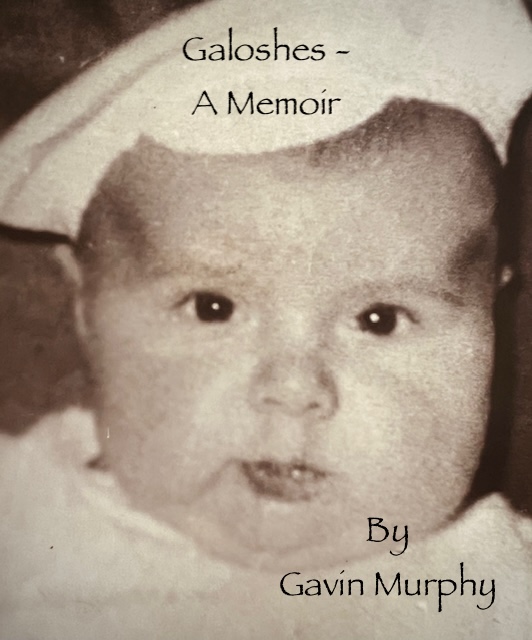


By Gavin Murphy
Summer


The spartina is turning
neon bright green but
still burnished with
browns and yellows.

The cordgrass has a root system
that interlocks with other plants
to form a massive field of vegetation
that covers innumerable miles
of coastline. Thus, Spartina
alternaflora creates a kind of
super habitat, resisting erosion,
and even standing up to
hurricane winds, which very well
may come later in the summer.

A brief sun shower:

The spartina glistens as
the rain falls,
cascading down through
sunlight.

****
A swamp oak has taken root
at the edge of our yard
abutting the marsh.
It has bifurcated into two trees.
One tree shoots straight into the sky.
The other is twisted at its waist,
skewing out over the water.

(I think it's a laurel or water oak
but google identifies it as a live oak,
which would be very nice as they
grow to be spectacular trees,
the kind one sees dripping with
spanish moss and lining long
driveways leading to big
plantation homes. But I
don't think that's what it is.)

I don't want two trees,
so I have to decide which to keep
because if you don’t control
the native plants growing
in your yard next to the marsh,
you will end up dwelling in a
subtropical forest with rat snakes
hanging from the trees.

(Did I mention that rat snakes eat rats?)

Meanwhile, honey bees have
taken over the bird bath.
They’re hot and thirsty
and seem to like the algae
or whatever that green stuff is
that grows on the
edge of the birdbath.

The birds and the bees don’t
necessarily like sharing the
birdbath but they do.

Dragonflies come with the heat.
Manic. They put the bug in bug eyed.
(Or is it the eye in bug eyed?)

****
Ospreys, often in pairs, soar
in the sky above, scanning
the marsh water for prey.
An outgoing tide makes it easier
to spot their favorite food: fish.

****
Sounds puncture the
silence in the marsh.
Typically birds calling.
Often just the breeze
rustling leaves in the
trees, whispering in
the spartina. A kayaker’s
paddle stroking through
the water, the craft
sliding through some partially
submerged cordgrass.

Somewhere above a seagull cries.
A crow caws.  A car crosses a
nearby bridge, its tires humming.

Sometimes you can hear the
oysters feeding, their shells
snapping mandible like.
Filtering the brackish broth
containing plankton and
other nutrients through their gills,
they make a popping clacking
noise.

These mollusks filter and clean
a lot of marsh water. (Because
these oyster beds are too close to
human activity, we don’t eat them.)

Birds like to hide in the cordgrass -
Not just marsh hens but wrens,
sparrows, blackbirds. The marsh
also provides protection for animals.

Alligators don’t inhabit the salt
marsh, except when they do.
They aren’t supposed to be in
salt water but they basically go
wherever they want. I’ve seen
them where they are not
supposed to be, but never in
our section of the marsh. Not
yet anyway.

The herons, storks, ibis and other
‘wading birds’ like to build their nests
in high trees in more remote areas
above alligator infested fresh water
as the gators keep the coons
and other nest raiding predators
at bay.

Of course there are
alligators in nearby rivers,
and every once in a while,
one or two go surfing in the
ocean (which they are not
s'posed to do because,
again, they’re s'posed
to stay in fresh water.)

Yes, the marsh and some of the
remaining adjacent maritime
forest are still wild, but not too wild.
There’s no bears left. No water
moccasins, at least not in our
immediate vicinity.

There are a few rattlesnakes in
the dunes on the beach side of the
island. (They too sometimes
go where they’re not supposed
to.)

Coyotes have recently
been digging up sea turtle
nests, but there are no
panthers or pythons,
at least not yet, though
some of the latter may
find their way up I-95
from Florida at some
point.

There are some wild boar
stampeding about in uninhabited
areas, the descendants of escaped
domesticated swine, and very
elusive. Years ago I actually
caught a glimpse of a feral hog,
by glimpse I mean about five
seconds of its rump, which it
had in high gear, vanishing into
the bush. (Yes, you can eat
wild boar and hunting them
in fact is encouraged because
they’re considered invasive
pests. Don’t expect them to
taste like pork chops from
Kroger. Some folks insist boar
meat is better. I don’t know.)

Bobcats have been spotted
but I’ve never seen one.

I steer the kayak back to land.
The tide is going out now.
When I step out of the kayak
my foot sinks in pluff mud.
If I’m not careful the mud will
suck the shoes right off my feet.
I manage to extricate myself
from the squishy stuff and
make it to shore.

When they are not diving for fish,
the ospreys simply waltz in the sky,
chirping a high-pitched chirp
to one another, sometimes
urgently, perhaps announcing
their territory or conversing with
a mate.

(You would think a hawk with
ferocious talons capable of
plucking a fish almost it’s own
size from the ocean would
have a more formidable call.)


Another high flyer that
occasionally appears
in the sky: bald eagles.
One might ride a thermal
before perching for a few
minutes atop a utility pole,
then disappear.


****
As it gets hotter, activity
at the bird bath drops off.
The doves do come
often around sundown…

My poem:

When the Doves Come

They come with the dusk.
Tentatively.

They gather in the shadows on the
ground at the base of the birdbath.
Fluttering their wings,
sometimes cooing, skittish.

A bold one leaps to the edge
of the birdbath. Eventually others follow,
gathering in communal confidence.
Safe together.

Until

One senses something amiss.
It breaks for a nearby tree.
Then another bolts
and the entire flock erupts,
scattering in the twilight
like ascending stars.

Leaving one lone bird
still in the birdbath,
apparently unafraid.
Defiant even.

Perhaps just foolish.

****
The crows live in a tall pine.
They speak to one another.
‘Meet me at the bird bath.
I have something for you.’
‘Meet me on the chimney,
where we will dance.’

****
They know when you are
looking at them. They
remember who you are.

I decide to keep the scraggly
crooked tree. The one that
bends toward the marsh.
Maybe in the future it
will somewhat resemble
a bonsai tree, imparting
some additional Zen
into our world.

****
The varmint comes late at night,
so I have never actually laid eyes on it.
The critter digs holes in the yard.
A hole here. A hole there.
Searching. For what?

****
The marsh hens don’t like
motorcycles. They clack furiously
when a loud one passes nearby.
(They also don’t like the skeeter
spray chopper because it flys low.)

Marsh hens are not great flyers
should they need to flee. But
they are very fast runners
and can swim underwater.

(Audubon describes an encounter with
a mother marsh hen who charged him
while protecting her brood.)

All the birds are sensitive to sound.

When the street sweeper comes
down the nearby highway like a
monster, around dawn, brushes
spinning, motor whining loudly,
some of the birds get very edgy.

A great blue heron takes off,
flapping its giant wings,
complaining vociferously,
scolding with its guttural voice.

Audubon’s depiction of the
great blue heron is among his
greatest. The great bird stands
on giant yellow legs. Archangel
like wings spring from its arched
back. At the end of its elongated
neck is a feathered head with a
long pointed dagger like beak
open and ready to spear and
devour whatever it finds in the
marsh at its feet.

(See Audubon's Great Blue Heron - Plate 211)

****
The varmint strikes again. Digging
up the yard in a dozen different places.

****

Our cat Holstein (like the cow,
black and white) is a small feline
of the tuxedo variety. Likely also
part Siamese, he is very vocal.
He also is a formidable hunter,
stalking and attacking almost
any poor creature that enters
his vicinity, even scarily large rats
and full size squirrels. He displays
his trophies under the house
in the driveway: slaughtered birds,
rodents with their heads removed,
even eviscerated snakes.

I always thought indoor cats were
pathetic creatures but Holstein
has convinced me that outdoor cats
are surely a danger to wildlife.
Cats don't hunt because they're
hungry. They hunt because
it's a compulsion  - not to kill -
but to hunt.

This doesn’t mean I don’t love
you Holstein.

****
Wharf Crab. Armases cinereum.

Also called marsh crabs, these small
crabs are dark brown or muddy
in color. So they blend into their
natural habitat, which is supposed
to be the muddy marsh. But these
little crabs seem to be everywhere.
In the yard. Under the car. Under
the house. In the house.


(We had some baby snakes
in the house once too
but my wife would rather
forget about that.)

Not present in our yard but definitely
out there: blue crab and fiddler crabs,
the guys with one really big claw they
wave around like they’re playing a violin,
and sometimes periwinkle snails that feed
on the cordgrass.

Shrimp grow up in the marsh too.

All these creatures need the
brackish water they live in to
have the proper mix of salt
and fresh water. Thus, they
and the marsh itself, are
vulnerable to drought
(more of which could be
caused by global warming)
as less rain reduces the
quantity of fresh water
flowing into the marsh.

When the last big hurricane came,
it caused a storm surge nearly eight feet
above normal tide levels. The marsh
rose up and sent almost two feet of water
across our yard and into the entryway to
our house. (Yes, it was a mess.)

Tornadic winds blew down almost
all of the big old Pines.

When it was over, we had a great view
of the lighthouse.


Now there is a pine sapling popping
up on the periphery of the marsh
where a big mature pine once stood.
Is it a loblolly or, the more common
here, longleaf pine?

(Google AI says it is a longleaf,
or a slash pine…)

An arborist I am not and it’s tricky
to tell the difference. There also are
several types of oak, easier to tell
apart. Adding to the confusion: what
everybody calls a cedar is really a
juniper.

****

My wife has decided a paper wasp
nest in the awning above the deck
is too close for comfort. She is more
than willing to do the extermination.

****
A rare sighting: A pair of roseate
spoonbills swoop in and land
beside the pond formed by
the drainage pipe that runs
under the nearby highway.
At first you think you're seeing
pink flamingos, but you're
looking at a bird that was
almost hunted to extinction
by plume hunters trying to fill
the demand for rose colored
feathers that ended up
adorning hats worn by high
society ladies in the 1800s.
The spoonbill, so named for its
spatula like spoon shaped beak,
indeed looks like a homely version
of a pink flamingo.

(See Audubon's Roseate Spoonbill - Plate 362)

Now more frequently seen in Georgia,
they breed in mangrove swamps in Florida
where their courtship rituals include
bill clasping and stick exchanging.

It’s ebb tide and the spoonbills forage
contentedly for a snack in the shallow
water. A pair of egrets watches.

****
By late afternoon the clouds
have darkened, the humidity is
at saturation point. The heat index
is somewhere in the 100 degree
range. You pray for rain. For
precipitation to bring relief
from the heat. Thunder rumbles.
Lightning arcs above the marsh.

It doesn’t rain.

Later, cicadas, reveling in the heat,
celebrate the sunset with
their frantic mating song.


Coming Next:
Fall


Posted August 2025
Artwork: Nine-year old grandson’s school project depicting the salt marsh: Food chain of a coastal Georgia marsh: (Toy sea turtles had to stand in for hatching terrapins. The eagle has flown away.) Grade: 100

Leave a Reply