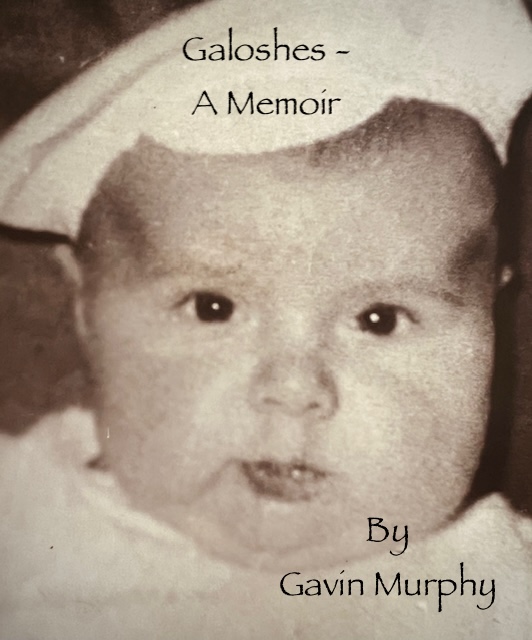


By Gavin Murphy
I don’t know exactly what I’ve been searching for over the years when I visit the “old neighborhood” on the South Side of Chicago. I guess I want to fill a void left by the death of my father so many years ago now and the fact that I have no memory of the place where I was born but lived only briefly, the place that dad spoke of with such fervent nostalgia.
It was on the South Side, many years ago now, that my grandparents – Edward and Mary – both Irish immigrants, courted and were married. Here my father John was born and raised, went to church with ambitions to become a priest himself, took his first drink and briefly, after serving in WWII, walked the beat as a cop.
The family – my grandparents, my dad and his two younger brothers – settled in the vicinity of 65th Place and South Blackstone Avenue, in those days the heart of a tightly knit largely Irish working class neighborhood known as Woodlawn. At this busy intersection there was a newsstand, a drug store with a soda fountain, a laundry, a couple of grocery stores and a barber shop. Local residents came to shop, buy a newspaper, exchange information about sons serving in the military and to just hang out and gossip.
The surrounding blocks were lined with brownstones, greystones and brick apartment buildings. The neighborhood was near Jackson Park and the shore of Lake Michigan.
“It was a very lively place,” my Uncle Jerry told me.

The stores long ago disappeared from the intersection, replaced by vacant lots. Old brick residences and apartment buildings are scattered about. Newly constructed townhomes have popped up here and there. Auto traffic is light. Occasional pedestrians appear.
A group of young black men who lived on these very streets in the late 1950s and early 1960s would organize the infamous Blackstone Rangers street gang. But in my father’s time there – the thirties, forties and early fifties – Woodlawn was white, and again, for the most part, Irish.
Dad and family at one point lived in a brick three-story six flat on 66th Place close to the park. The building is long gone, like so many others in the neighborhood, a casualty of neglect, arson and finally the wrecking ball. The family over the years lived in other apartments in the area, including a place on Dorchester Avenue. It seems that grandpa, who liked to play the ponies and also socialize in the local taverns, wasn’t always on time with the rent, prompting relocation. Bets were easy to make as the bookies came right into the bars.
It was the Depression when my dad played on these streets as a kid. He was luckier than many because grandpa (he died before I was born) had a job as a switchman with the Illinois Central Railroad. The tracks cut right through the old neighborhood and there was a station at 67th Street. The IC (usually pronounced “eye see”) was the best way to get downtown from Woodlawn. Mass transportation was so reliable, in fact, that my father didn’t learn to drive until he was 30.
(It seems that everyone in the family, including my grandmother, at one time worked for the IC.)
As kids, my father and my uncles walked up Blackstone Avenue to St. Cyril School. On the way, they passed the church where my father and mother would one day be wed. After graduation from St. Cyril, my dad spent a time as a seminary student in Canada. He later attended Hyde Park High School. Dad never made it to the priesthood. Instead, he served in the South Pacific during the war, then returned to the South Side.

I recall my dad describing how the bars on 63rd Street became party central for the returning vets. At that time 63rd was a hub of activity, a thriving commercial district, with clanging street cars and an elevated rail line running overhead all the way to Stony Island. The taverns gave way to jazz clubs after white flight set in and the street for a while became a lively gathering place for the newly predominant black residents. Today most of the apartment buildings, bars, restaurants, movie theaters and stores from that era are gone, demolished years ago. Much of the once boisterous boulevard is now lined by acres of vacant lots.
Dad worked briefly as a cop. Once he was assigned to protect a black family recently moved into the neighborhood when it was still mostly white. It was a frigid winter night. In those days there were few patrol cars, and after several uneventful hours of standing in the cold, my dad let himself into an unlocked parked car in an effort to get warm. Soon he was prone in the back seat, and soon after that, asleep. He woke in a moving automobile. Sheepishly, he tapped the driver on the shoulder. The surprised driver almost ran off the road.
There were lots of stories like that from the old neighborhood. Eventually, my dad left the force and went to the University of Illinois on the GI bill. After graduation he landed a job as a reporter.

A friend from the South Side and I have, from time to time over several decades, cruised the streets of the old neighborhood. In winter the cold and the snow have served to keep the locals, mostly poor blacks, inside. My friend, who also is black, would sometimes stop the car. I would get out and snap a few quick pictures, then get back in the car before someone noticed the white guy with a camera.


Woodlawn was developed in the late 1800s, around the time of the Columbian Exposition, when Jackson Park was the sight for several of the world fair’s pavilions, as was the Midway, near the University of Chicago close by. The elevated train tracks were expanded along 63rd street for the fair, and Woodlawn eventually became a predominantly Irish neighborhood, one of several on the South Side. Its proximity to the lakefront, the park and good mass transportation made it a very desirable location. For a long time blacks were kept out by restrictive covenants.
(The neighborhood and Jackson Park feature prominently in Erik Larson’s blockbuster book The Devil in the White City. An aside: Larson and I were classmates in high school.)

Legend has it that my grandfather entered the U.S. by jumping ship in Baltimore, Maryland. He was one of eleven children, an Irish street urchin raised in Birmingham, England. He is said to have walked from Baltimore to Chicago, resting in churches along the way. My grandmother came to Ellis Island and then Chicago from County Sligo in the old country.
The family moved to Woodlawn from around 55th and Halsted Streets, another Irish neighborhood known as “Canaryville.” (For a brief time they also lived in Homewood, a south suburb.) The name derived, according to some, from the fact that many Irish women worked as domestics and they often sang Irish tunes as they worked, earning the moniker, “kitchen canaries.” As the Irish immigrants moved up the economic scale, newly arrived black migrants from the South took over these domestic jobs.
Jerry defined Woodlawn in the old days as bordered by the University of Chicago to the north, 67th Street to the south, South Cottage Grove Avenue to the west and South Stony Island Avenue to the east.
I was born in South Chicago Community Hospital, the hospital where mass murderer Richard Speck’s eight student nurse victims worked. We moved to the West Coast when I was a year and a half, but before that we lived in an apartment in the 7000 block of South Cregier, in South Shore, a neighborhood adjacent to Woodlawn. The last time I saw our old apartment building there – in the late 1990s – it was burned out and abandoned.
I still have a few pictures of the gutted brick structure. I had planned to send my mother some photos of the place where she and my father lived when they were first married. A Peoria-born protestant, my mom studied at The University of Chicago, located not far from the old neighborhood, and met my dad while she too worked as a journalist. I didn’t send the photos, worried about how she would react when she saw the scorched brick, boarded windows and broken glass.


A Google search for the address today reveals a beautifully restored brick mock Tudor, nicely landscaped. I wouldn’t hesitate to send mom a photo now.
I myself returned to Chicago as a college graduate in the mid 1970s. I worked as a reporter and for a time stayed with my Uncle Jim, who was a Chicago cop. He had left Woodlawn years before to live on the Southwest Side. He was the first to introduce me to James T. Farrell’s trilogy, published in the early 1930s, about the life and death of Studs Lonigan. Studs and his fictional cronies lived in the Washington Park area, not far from Woodlawn. Studs seeks to be the prototypical Irish tough guy, with the trilogy unflinchingly depicting his life of gradual dissipation as he and his friends come of age during World War I, drinking and carousing their way through the Jazz Age and the Depression.
My uncle instructed me not to lose his copy of the book, as it was precious. I soon had a bad fright when, riding a bicycle in Lincoln Park, I briefly lost the hardcover edition. (To my Uncle Jim’s dismay I lived on the North Side, worse yet the Near North Side, near North Dearborn and East Division Streets, close to the Rush Street party zone. As a reporter covering the police beat I would learn that in cop lingo Division Street sometimes was referred to as ‘Perversion Street.’ I won’t say what they called Dearborn, but nearby Diversey Avenue was called ‘Perversey.’) Panicked, I retraced my path and found the book, on the ground where it had fallen from my rear rack. The novel taught me a lot about the Irish in Chicago and gave me a clearer understanding of my father’s world on the South Side.

“Studs was a loser,” my Uncle Jerry said, but he admitted as a young man he sought to emulate Studs. In fact the novel became a sort of handbook for South Side Irish males. Jerry wrote in his memoir about growing up in Chicago that “if you want a very accurate and not necessarily flattering story of the Irish on the south side of Chicago, read Farrell’s trilogy. I read it when I was about 16 years old… In my mind then these characters were the coolest guys in the world. I believe I even started to pattern my life after Studs. I was infatuated with the character.”
The fictional Studs spends a lot of time in Jackson Park, as did my dad and uncles. They played sports there, drank there, got into fights, had sex, got arrested. They swam, during the summer, in the fresh waters of Lake Michigan. There were organized softball teams sponsored by local businesses, mainly the taverns. A lot of the boys playing on these teams in my dad’s day would end up going off to war in the 1940s.
Jerry departed Chicago in the mid-1960s, moving to Cleveland with his wife and daughters. He got sober at a relatively young age and lived into his nineties. He moved to Seattle and loved the Pacific Northwest. Still, though he had no intention of returning, he missed Chicago and spoke often of his life as a kid growing up there (including during the Depression) and the good times he had as a young man living on the South Side. His memoir, distributed among friends and family, depicts that life in vivid detail – good and bad.
Jerry would come back for the occasional visit and one time we rendezvoused. I flew in and piloted him and a couple of his old pals around the old neighborhood in a rented car, listening as they reminisced. One of the guys – a gentleman who may have had knowledge on the subject – said I was an excellent “wheelman” – a reference to the driver of a getaway car. Coming from him I took it as a great compliment.
When I lived in Chicago my uncle Jim and I sometimes went to taverns on the Southwest Side, where he resided somewhat reluctantly as a refugee from the old neighborhood. After a night of drinking, I would fall asleep on the couch in his living room, only to wake at three or four in the morning and find him sitting at the kitchen table, his head bent over his well-worn but treasured copy of Studs Lonigan. He chuckled to himself as he read again about Studs and his gang and the drinking, fighting and carousing. He and my father, and their friends had done their best to live up to the legacy of Studs Lonigan.
Once, in the late 1970s, my uncle took me out to Woodlawn to show me my roots. But as soon as we came to those old streets, he became almost apoplectic with anger and frustration. He twisted in his seat, gripped the car’s steering wheel tightly and swore. He couldn’t stand to see what had become of the old neighborhood, the bombed-out buildings and decaying ruins. So we cut the sightseeing part of the trip short and retreated to a tavern in the vicinity where my uncle knew some of the surviving old gang still gathered and likely would already be drinking even though it was early in the afternoon. The bartender recognized my uncle so the door was unlocked and we were allowed entry. Sure enough there were a couple of guys who still remembered my dad and insisted on buying me several Old Styles.

I moved to California in 1980, but not before meeting my wife to be. To my uncle’s amusement, she was a Polish girl originally from the Southwest Side.
My father also was a refugee from the South Side. In typical post-war fashion, my family lived in suburbs close to several big cities as dad followed his career around the country as a newspaperman. In my father’s eyes, no city or suburb could ever take the place of Chicago, not Los Angeles, or Philadelphia or even New York. The people in those places didn’t have the same colorful character, the same gregarious capacity for urban life. The food was never as good. The churches weren’t the same and the taverns weren’t the same and the transit wasn’t as good. There was a hole in my father’s soul where there had once been the South Side.
Yet, he couldn’t go back there. It would have been the end for him. From time-to-time word would come that so and so had died. From a heart attack or from cirrhosis, another casualty of the Irish virus, another friend from the old neighborhood who drank, year after year at the same bars, almost every day, even when they had to lock the doors to keep “undesirables” out.

In the old days South Stony Island Avenue was the social vortex for my father, his father, and my uncles and their friends from the old neighborhood. Near here were the movie theaters, the shops and most importantly, the taverns.
The Southmoor Hotel was located at the corner of 67th and Stony Island near Jackson Park.
“The Southmoor was pretty fancy. We used to crash weddings there,” recalled my Uncle Jerry.
A street gang apparently took over the hotel before it was closed and eventually demolished.
Jackson Park is still there and the buses still run and the Illinois Central trains clatter up the tracks on their way to the Loop downtown. Pedestrians scurry up and down Stony Island Avenue, sweating in summer or bundled against the frigid temperatures and swirling snow in winter. But the working-class Irish who once lived in the neighborhood are long gone.
Some might describe what happened here, and in so many other neighborhoods in Chicago, as a classic example of how the working class is divided against itself, how economic barriers force competition between the races for a limited supply of jobs and housing. Many of the people who occupy Woodlawn now still struggle under the burdens brought on by poverty and the tragic fear and bigotry that still tear at the heart of this great city.
All this doesn’t mean you can buy an old greystone cheap. Property values have gone up as revitalization has gradually picked up steam and new townhomes pop up on long vacant lots in Woodlawn and mansions in nearby Kenwood are gut renovated and sold to urban pioneering affluent professionals, both white and black.
My friend, Stephan Garnett, was born and raised on the South Side. (He recently retired from teaching Journalism at Northwestern University and will soon begin teaching at the University of Chicago.) He says Woodlawn remained mostly white until the mid-50s, when the burgeoning black belt to the north finally spilled into the neighborhoods of Hyde Park, South Shore and Woodlawn.
For a while landlords made a killing, stuffing several black families into a building previously occupied by maybe one white family. But as white flight accelerated, businesses closed and absentee landlords failed to maintain their properties, the neighborhood imploded. Woodlawn by the late 1960s was dominated by street gangs, including the quasi-political Blackstone Rangers. (The gang – or Nation – apparently still operates today under various names and in different cities across the country.)
Stephan and I haven’t actually discussed whether my relatives moved out because blacks were moving in. I know my father left the South Side to follow his career. But I would be a hypocrite to say that my family would have stayed while other white families fled.
My Uncle Jim never left Chicago. He retired from the police force (after years of answering 911 calls) and spent his remaining days doing what he liked best, making the rounds of his favorite Southwest Side taverns, a lifestyle he evidently learned from his father, who did the same thing in and around Woodlawn after he retired from the IC.
(Grandpa ran up a few bar tabs at local watering holes, a couple of which were finally paid off, per his instructions, with cash from a life insurance policy that also paid his funeral expenses. My grandmother did her periodic drinking at home, instructing my Uncle Jerry to dispose of the empties discretely so the janitor wouldn’t see bottles in the trash.)
Dad finally got sober after he joined Alcoholics Anonymous. He died after a long illness, days after my son was born. He was just shy of 59.
Stephan and I worked together at City News Bureau of Chicago in the late 1970s. In the mid 1990s he worked with the BBC on a television series called The Promised Land, an engrossing documentary on the great black migration from the south to Chicago following WWII. Many of those migrants came on the Illinois Central Railroad. (The IC commuter line serving the city now operates as a part of the Metra system and Amtrak operates what is left of the storied passenger lines, including the City of New Orleans. Yes, the one in the song sung by Arlo Guthrie.)
One of Stephan’s duties during the making of The Promised Land, was to tour white BBC producers around the South Side as they scouted locations, including the infamous and notorious public housing projects.
“I showed them the Robert Taylor homes,” Garnett says. “You would have thought they were looking at the pyramids of Egypt they were so excited.”
The BBC folks wanted to see the “ghetto.”
Steve took them to Woodlawn, to 61st and Woodlawn Avenue.
“The block back then looked like Berlin after World War II,” Stephan said.
Now every one of those building has been refurbished and the University of Chicago, which has an immense footprint in the area, is building new dorms there. (Activists in Woodlawn have long sparred with the university as it seems to have a voracious appetite for real estate in the area.)
It’s been a while since I’ve been back to the “old neighborhood.” Stephan tells me that Woodlawn is very gradually becoming more like Hyde Park, the affluent, largely white enclave that abuts the U of C campus. Hyde Park is home to many of the prestigious university’s professors and some of them have found their way to Woodlawn. Over in Jackson Park they are building the Barak Obama Presidential Center. The former president has a house in Kenwood, right on the border of Hyde Park.
There are still challenges. Some potential buyers, investors and renters remain wary. There is still too much crime, particularly on streets outside of the university’s security zone. There is still poverty and limited opportunity for too many of the local residents.

I remember visiting Stephan once when he lived near 98th and Indiana Avenue. From there you could hear the moaning whistles of the trains at night. I imagined my dad and his brothers as kids, in their beds in their apartment in Woodlawn, hearing the horn’s melancholy tune. The sad clarion call drifts across the South Side, signaling the coming and going of the trains. It resonates with arrivals and departures, and sings of the impermanence of people, place and even old neighborhoods.
For videos and more photos see Photo page
Posted November 2024
Leave a Reply